

Silo Scale Versus Inventory Software for Feed
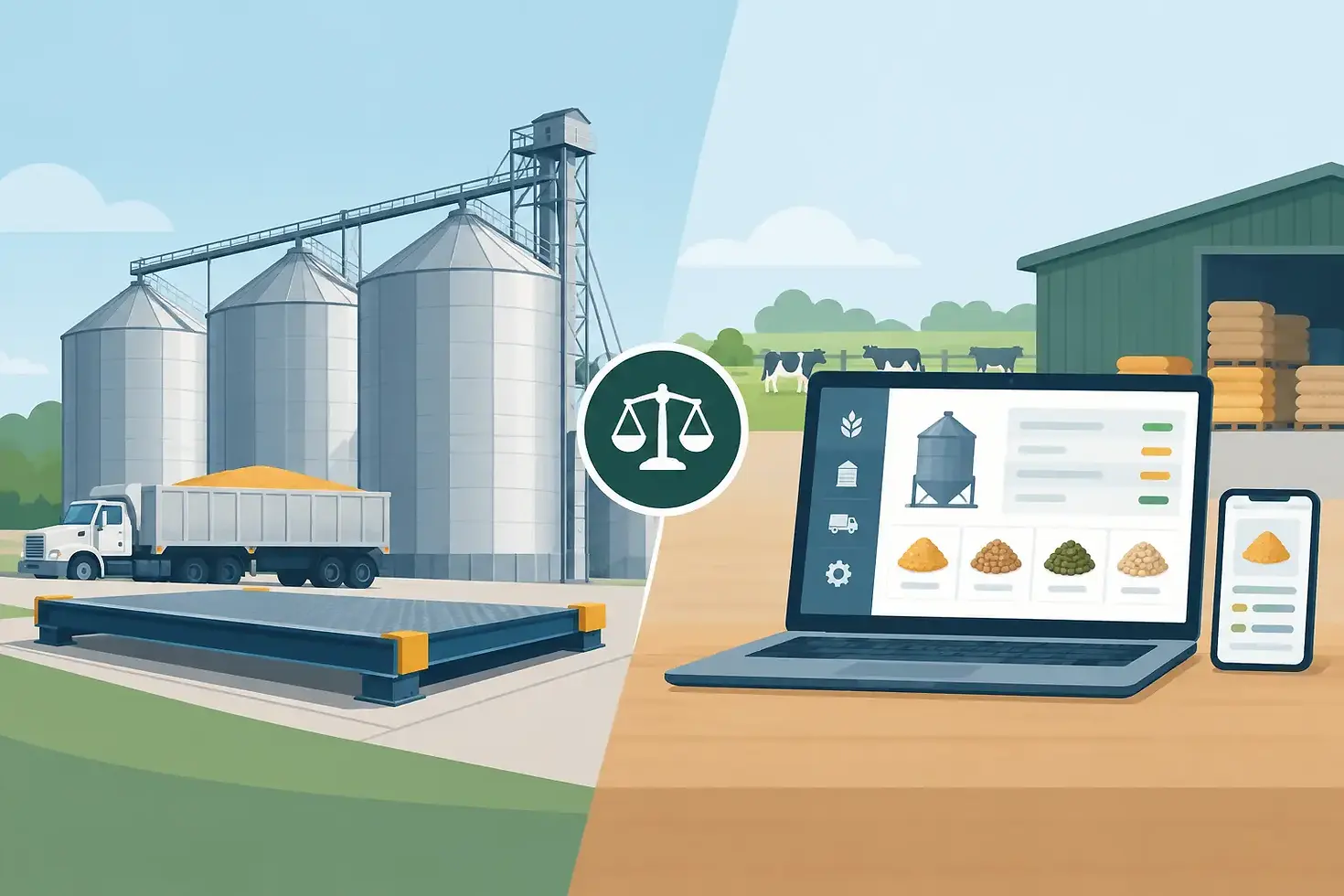
A feed shortage rarely begins when the bin is empty. It begins when the number on a report no longer matches the feed physically available at the house. The decision between silo scale versus inventory software matters because each system answers a different question. One measures what is in the silo. The other estimates, organizes, and communicates what should be there.
For commercial poultry and pig operations, that distinction affects feed ordering, flock performance analysis, labor requirements, and the ability to respond before a delivery or equipment problem disrupts production. The strongest feed-management setups do not treat a silo scale and software as interchangeable. They use each tool for the job it performs best.
Silo Scale Versus Inventory Software: The Core Difference
A silo scale is a physical measurement system. Load cells installed beneath a feed bin measure the actual weight carried by the silo structure. When installed and calibrated correctly, the system provides a direct reading of feed on hand, including changes caused by feed deliveries, feed use, bridging release, or unexpected loss.
Inventory software is a data-management system. It typically starts with a known inventory balance, then calculates the remaining feed by adding recorded deliveries and subtracting expected or recorded feed consumption. Depending on the platform, it may also manage purchase orders, feed mill deliveries, bin assignments, flock records, ration data, cost information, and multi-site reporting.
The difference is simple but operationally significant: a scale measures reality at the bin, while software manages the records surrounding that reality. Software can provide a useful estimate. A silo scale provides the physical verification needed to know whether the estimate is correct.
What a Silo Scale Reveals at the House
Feed is one of the largest operating costs in intensive livestock production. A small error in a single bin may not attract attention during one day of production. Across multiple houses, flocks, or sites, however, repeated inventory errors can affect purchasing decisions and hide equipment issues that deserve immediate attention.
A silo scale provides a live or regularly updated weight value. Production teams can use that value to confirm feed deliveries, monitor daily feed disappearance, establish reorder points, and verify that feed usage tracks expectations for bird age, weather conditions, and production stage.
This is particularly valuable when feed delivery volume is disputed. A delivery ticket states what was loaded or invoiced, but it does not necessarily prove the amount that reached a specific silo. A bin scale allows the farm to compare the documented delivery quantity with the actual increase in bin weight. That comparison supports better accountability between the farm, feed supplier, and transport provider.
Physical measurement also exposes events that software alone may not detect. A feed line running longer than expected, an improperly adjusted feed valve, a damaged auger, a leaking boot, or an unrecorded transfer can all create a gap between expected and actual feed inventory. The scale does not diagnose the cause by itself, but it identifies the discrepancy early enough for staff to investigate.
Scale accuracy depends on mechanical installation
A silo scale is only as reliable as its installation and maintenance. The bin must be supported correctly on load cells, with proper attention to mechanical restraints, cable routing, auger connections, and any structure that can bind the silo or carry part of its weight. A poorly installed scale may produce stable-looking numbers that are still inaccurate.
Operators should also account for normal influences such as wind loading, uneven bin conditions, buildup, and the movement of connected equipment. These are not reasons to avoid weighing. They are reasons to select equipment designed for agricultural use and to commission it with qualified installers who understand feed-bin structures.
For operations that need actionable feed information, a properly engineered silo weighing system is not just a bin accessory. It becomes a production sensor.
Where Inventory Software Adds Value
Inventory software becomes more valuable as operational complexity increases. A single farm with a small number of bins may be able to manage deliveries and feed projections with a basic recordkeeping process. A multi-house or multi-site operation needs a more organized way to manage data across feed types, flock groups, suppliers, and locations.
Software can retain historical records that a scale display cannot. It can show delivery history, compare projected consumption against actual use, assign inventory to a flock or production group, and provide centralized reports for production managers. It may also support planning functions such as purchase scheduling, feed budgeting, and reorder alerts based on projected consumption.
This record layer is essential for decision-making. A scale can report that a silo contains 3,200 pounds of feed. It cannot independently identify which feed formulation is assigned to that bin, what the delivered cost was, whether the remaining quantity is adequate for the next scheduled delivery, or how usage compares with the previous flock. Software creates that broader operating context.
The limitation is that software depends on the quality of its inputs. If deliveries are entered late, transfers are missed, beginning inventory is wrong, or consumption is calculated from assumptions instead of measured data, the inventory balance drifts. The dashboard may remain clean and organized while the on-farm number becomes less trustworthy each day.
Why Calculated Inventory Can Drift
Calculated inventory usually begins with a simple equation: starting feed plus deliveries minus feed used. The weakness is not the equation. The weakness is the number assigned to feed used.
Many systems estimate consumption from bird count, age curves, feed schedule settings, or expected daily usage. Those estimates can be useful for planning, but livestock production does not run exactly to a projection. Temperature changes, bird health, lighting programs, feeder adjustments, water availability, feed texture, and management practices all influence actual consumption.
In poultry houses, feed equipment may also introduce gaps between controller settings and real feed movement. A feed line can operate, sensors can change state, and a silo level can fall without the exact feed quantity being known. If a production team assumes that run time equals a fixed amount of feed, the estimate can become unreliable when auger performance or feed density changes.
A physical silo weight establishes a better baseline. Software can then use scale data rather than assumptions to update inventory records and analyze feed disappearance. This changes inventory management from a calculated best guess into a measured operating process.
Choosing the Right System for Your Operation
The right choice depends on the question your team needs answered most often. If the primary requirement is knowing exactly how much feed remains in each bin, a silo scale should be the starting point. It delivers direct measurement at the point where inventory risk exists.
If the operation already has reliable physical inventory data but struggles to organize deliveries, costs, site comparisons, and feed records, inventory software can add significant value. It turns data into reporting and planning tools that management can use across the business.
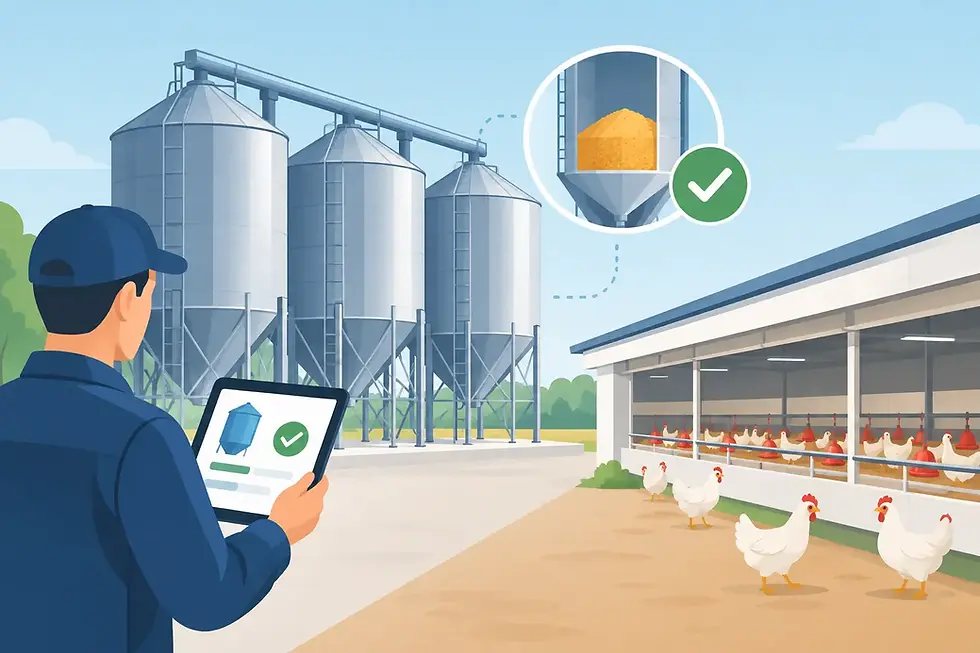
Most commercial operations benefit from both. The scale provides the measurement layer. The software provides the management layer. A connected farm control platform can add another level of value by bringing silo weights, feed system activity, environmental conditions, alarms, and remote access into the same operating view.
Agromatic systems are designed around this connected approach. Silo and batch weighing, feed control components, and Columbus AGM controller architecture can help producers monitor feed movement alongside the conditions that influence animal performance. The objective is not to collect more numbers. It is to make the numbers available where decisions are made.
Questions to ask before investing
Before selecting equipment or software, production managers should define the operational problem. Four questions usually clarify the requirement:
Do you need verified feed-on-hand values for each bin, or only a projected balance?
How often do delivery discrepancies, surprise shortages, or emergency feed orders occur?
Can staff consistently enter every delivery, transfer, and adjustment into a software system?
Do you need silo information connected to house controls, feed alarms, and remote farm access?
The answers determine whether the immediate need is physical weighing, better data management, or an integrated system. They also prevent a common mistake: buying software to solve a measurement problem, or buying a scale without establishing how its data will be used.
Build Feed Control Around Verified Data
A practical feed-control strategy starts with dependable measurement at the silo, then carries that data into the records and controls used by the farm. Set clear reorder thresholds, compare delivery weights with ticket quantities, review daily disappearance against production expectations, and investigate material deviations before they become shortages or unexplained costs.
The next useful improvement is often not another report. It is a verified bin weight that gives the report a reliable starting point.

Comments