

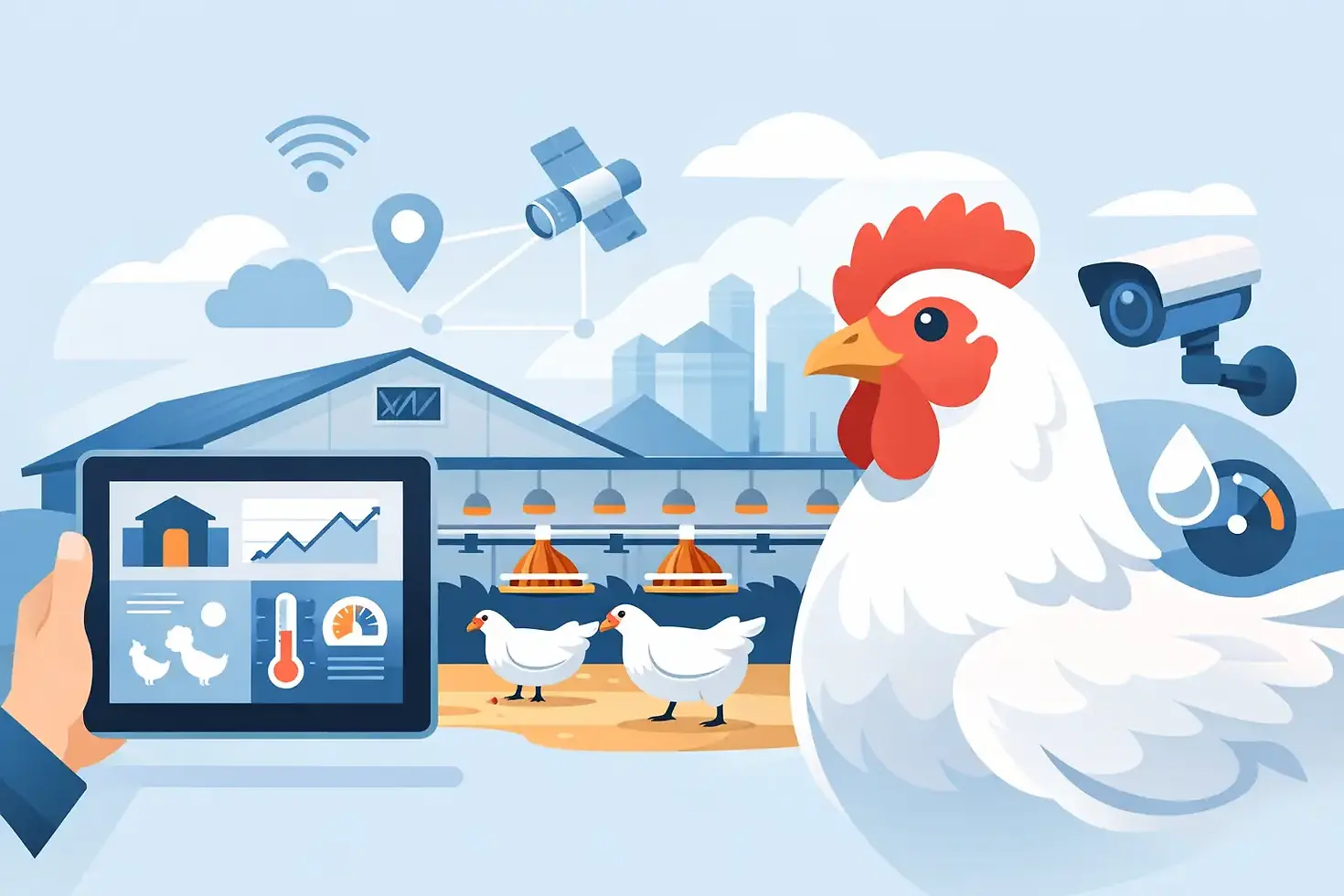
Precision Poultry Systems That Improve Control
A poultry house can look normal while performance is already moving in the wrong direction. A small ventilation imbalance, rising CO2 level, wet litter area, or unexplained feed variance can affect uniformity long before it becomes obvious during a walk-through. Precision poultry gives production managers the measurements and control capability to identify those changes early and act on them with confidence.
For commercial broiler, breeder, pullet, turkey, and layer operations, this is not simply about adding more sensors. It is about connecting climate control, feed information, bird weight, and alarm response into one operating system that supports daily decisions at the house level and across the farm.
What Precision Poultry Means in a Commercial House
Precision poultry is the use of connected controls, sensors, scales, and production data to manage the poultry environment and flock performance with greater accuracy. The objective is practical: maintain the target conditions for the birds, verify that systems are operating as intended, and catch deviations before they become expensive.
A modern poultry house has multiple systems working at once. Fans must provide the correct air exchange and static pressure. Inlets must respond correctly. Heating, cooling, lighting, feed delivery, water, and weighing all influence the flock. Managing these systems independently creates blind spots. A controller that brings the information together provides a clearer operating picture.
The value is highest when measurements lead directly to action. A temperature reading alone has limited value if ventilation stages, heating output, humidity trend, and bird response are not considered alongside it. Precision control turns separate readings into a usable management process.
Climate Control Is the Foundation
Environmental control remains the starting point because bird comfort, litter condition, feed intake, and growth depend on it. Temperature is essential, but it is only one part of the climate decision.
Relative humidity affects litter quality and the house's ability to remove moisture. CO2 measurement provides an indication of ventilation adequacy, especially during minimum ventilation periods. Static pressure data helps confirm whether inlets are opening and air is entering the house as designed. When these signals are available to the climate controller, ventilation decisions can be based on actual house conditions rather than fixed assumptions.
Measure the Conditions That Drive Bird Response
A useful precision poultry system commonly monitors several core inputs:
Temperature at appropriate bird-zone locations
Relative humidity for moisture management
CO2 for minimum ventilation assessment
Static pressure for inlet and fan performance
Outside conditions that affect ventilation and heating demand
Sensor placement and maintenance matter as much as the controller logic. A humidity sensor near an unrepresentative wet area can drive the wrong response. A CO2 sensor placed where fresh air enters may understate house conditions. Sensors should be installed where they represent the air the birds experience, protected from direct water exposure and routinely checked for cleanliness and accuracy.
The correct setpoint is also flock-specific. Young birds require a different control strategy than heavy broilers approaching market weight. Seasonal conditions, insulation quality, equipment capacity, litter condition, and stocking density all affect the settings a house needs. Flexible controller configuration is more useful than a one-size-fits-all program.
Bird Weight Turns Observation Into Data
Manual bird sampling remains valuable, but it provides a limited snapshot and requires labor at a time when consistency is critical. Automatic bird weighing systems add frequent weight data across the grow-out period, allowing managers to follow average weight and weight distribution more closely.
The benefit is not limited to knowing whether birds are on target. Weight trends can reveal a change in feed intake, environmental stress, equipment access issues, disease pressure, or uneven flock performance. If the daily growth curve begins to flatten, managers can compare the timing against climate events, feed delivery records, and water data rather than waiting for a weekly sample to confirm a concern.
Weight data must be interpreted with care. A scale that is poorly located, not accessible to enough birds, or not maintained can create misleading results. Managers should look for a stable trend over time, not react to every isolated data point. The most useful system combines reliable scale hardware with filtering and reporting that make the flock trend easy to review.
Feed Monitoring Protects Margin and Flock Consistency
Feed is one of the largest variable costs in poultry production. Knowing that a feed line has run is not the same as knowing how much feed was available, delivered, and consumed. Silo weighing, batch weighing, feed valves, and wireless feed sensors provide greater visibility into the feed system.
At house level, feed use should be reviewed against bird age, weight gain, environmental conditions, and expected consumption. A sudden feed-use change can be an early operational signal. It may indicate a bridging issue in a bin, a line problem, incorrect feed delivery, a controller setting change, or a flock health concern. The data does not diagnose the cause on its own, but it tells the manager where to investigate.
For multi-house farms, accurate silo and batch data also improves inventory control. It reduces reliance on estimates and gives the production team a more dependable record of feed movement. This is especially useful when comparing flock performance between houses or evaluating feed conversion results.
One Controller, One Operating Picture
The strongest precision poultry installations avoid creating a collection of disconnected dashboards. If climate, feeding, weighing, alarms, and access controls each require separate systems, the management team spends time reconciling information instead of managing the flock.
An integrated controller platform can bring environmental equipment, sensors, scales, and feed components into one interface. The Columbus AGM controller platform, for example, is designed to support configurable poultry-house control with touchscreen operation, remote internet access, and expansion options as operational needs change.
Centralization does not mean every decision should be automated without oversight. It means the controller can handle repeatable responses within defined limits while staff focus on exceptions that require judgment. A manager can review alarm history, compare house trends, adjust approved settings, and verify that equipment responded as expected without being physically present at every building.
Remote access is particularly useful for confirming an alarm condition outside normal working hours. It should support, not replace, a clear response plan. Personnel still need defined responsibilities for power loss, communication failure, high temperature alarms, water interruptions, and ventilation equipment faults.
Design for Reliability Before Adding Features
Precision systems produce value only when the underlying equipment is dependable. Before adding advanced reporting or remote capability, make sure the house has reliable electrical protection, correctly sized ventilation equipment, maintained sensors, tested alarms, and backup procedures.
Controller expansion is another practical consideration. A farm may begin with climate control and later add CO2 sensing, bird scales, silo weighing, or additional feed monitoring. Selecting an expandable architecture can prevent unnecessary controller replacement when production requirements change.
Configuration should reflect the actual house. Tunnel-ventilated broiler houses, breeder facilities, turkey barns, and layer operations have different airflow patterns, production targets, and equipment demands. The best control strategy is the one that matches the housing design and the flock program, not the one with the longest feature list.
Using Data Without Creating More Work
Data should reduce uncertainty, not create an extra reporting burden. Production managers need clear daily information: Are house conditions on target? Is feed use following the expected pattern? Is flock weight progressing? Did any alarms occur, and were they resolved?
Set a routine for reviewing trends at the same time each day. Compare houses with similar bird age and programs, but account for meaningful differences such as orientation, equipment condition, and placement date. When a variance appears, investigate the relationship between climate, feed, water, weight, and equipment status before changing setpoints.
The most effective precision poultry programs are built around disciplined response. A sensor creates awareness. An integrated controller creates visibility. Consistent follow-through is what turns those capabilities into better bird conditions and more controlled production.
Start with the measurements that address the farm's biggest blind spot, verify that the equipment and response procedures are reliable, then expand the system as the operation needs more control. The goal is not more technology in the house. It is better decisions while there is still time for those decisions to matter.


Comments